Get the full truth
Need to examine a specific question as part of a private or corporate investigation?
Lie Detectors UK provides private, examiner-led lie detector test services for investigators, individuals and businesses who need clear, fact-based questions handled confidentially.
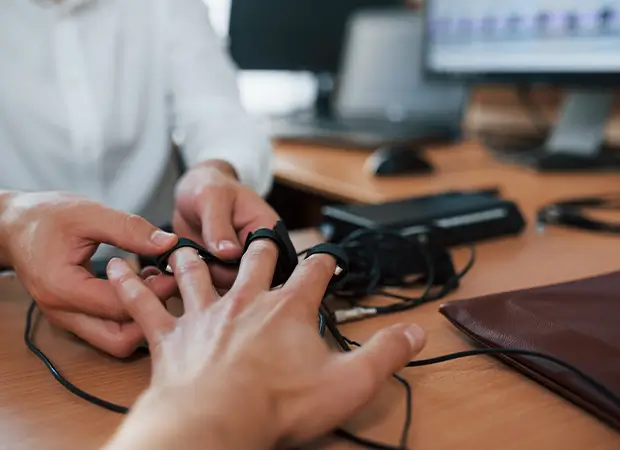
A private lie detector test can help examine a specific factual question as part of a private or corporate investigation.
This service may suit private clients, private investigators or businesses that need to examine a clear issue linked to an incident, dispute or suspected wrongdoing. The polygraph testing should focus on agreed questions rather than broad suspicion or general character judgements.
Lie Detectors UK provides examiner-led polygraph examinations with clear questions, confidential handling and a written report explaining the polygraph results.
A private investigator lie detector test can support wider investigation work, but it should not replace hard evidence, police involvement where necessary, legal advice or a professional investigation.
For private individuals, a lie detector test may help examine a specific incident, dispute or concern involving another person. This can include family matters, accusations or other circumstances where the issue can be narrowed to clear factual questions and answers.
For businesses and private investigators, polygraph testing may support an internal investigation involving staff, business partners, workplace misconduct, disputed accounts or suspected theft. It can provide another source of information alongside documents, interviews and other evidence gathered during the investigation.
A written report can provide supporting information for a private or corporate investigation. Polygraph evidence should not be treated as automatic proof, a final decision-maker or a replacement for wider investigation work.
A lie detector test depends on carefully prepared questions. During the pre-test interview, the examiner reviews the issue and agrees the questions with the person taking the test before the examination begins.
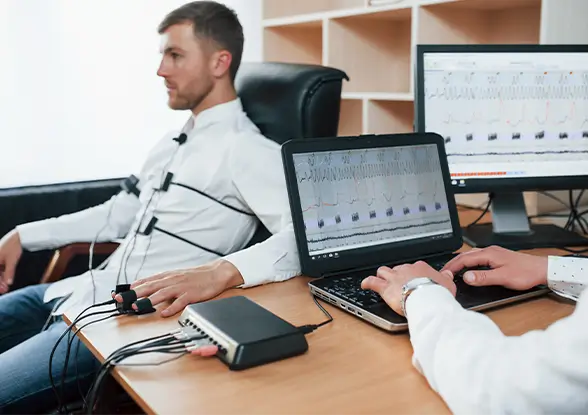
During the testing process, the examiner may compare relevant questions with control questions while monitoring physiological responses such as heart rate, blood pressure and skin conductivity. These responses form part of the data reviewed by the polygraph examiner.
This keeps the detector test focused on facts that can be examined clearly rather than broad suspicion or general character judgements.
The questions should be:
Accuracy
Clients often contact Lie Detectors UK during sensitive personal, relationship, or workplace situations. These reviews highlight the communication, professionalism, and care our clients experienced during the process.
For disputes involving business partners, staff, an internal investigation, suspected dishonesty or another specific commercial concern.
For specific allegations involving missing property, stolen money, unauthorised transactions or a defined act of fraud.
For serious disputed matters where the focus is on structured lie detection, recorded physiological responses and professional interpretation.
For someone responding to specific false accusations they deny and want examined through clear, factual questions.
For solicitor, court-related or legal-use questions where you need to understand how a private report may fit into a wider legal situation.
Yes. Private investigators, private clients or businesses can make a test request and discuss whether a lie detector test is suitable for the issue being examined.
The test should focus on a clear factual question linked to the investigation.
The examination may address a specific statement, incident, disputed account or suspected wrongdoing where the questions asked can be answered clearly with “yes” or “no.”
It should not be used for broad suspicion, feelings or general judgements about someone’s character.
During a polygraph examination, sensors monitor physiological responses including heart rate, blood pressure and skin conductivity while the examiner asks agreed questions.
The examiner reviews the response data and compares reactions across relevant and control questions. Because anxiety and other circumstances can affect responses, the results require professional interpretation rather than being treated as automatic proof of truth or deception. Surfer specifically identifies these physiological measurements and question comparisons as core information to cover.
A polygraph is not infallible. Anxiety, the testing environment, question design and examiner skill can affect accuracy, which means false positives are possible.
For that reason, polygraph results should be considered alongside other evidence rather than used as the sole basis for an important decision.
No lie detection method can guarantee perfect accuracy. A person’s physiological responses can vary, and there is a human factor in both the test and its interpretation.
This is why a professional examiner follows a structured testing process and avoids claiming that a detector test can prove deception with absolute certainty.
Yes. The person taking the test must agree to participate before the polygraph examination can go ahead.
The written report is handled confidentially and shared according to the arrangements agreed before the test.
Where a private detective or investigator is involved, the report recipient should be confirmed before the appointment.
Yes. Polygraph results can provide supporting information or investigative leads in some circumstances.
They should not be treated as automatic legal evidence and do not replace police involvement, legal advice or a wider criminal or private investigation.
No specialist preparation is normally required because the examiner explains the process before testing.
The candidate should avoid alcohol and illegal drugs for at least 12 hours before the appointment and should arrive rested and ready to follow the examiner’s instructions.
If you need to examine a specific question as part of a private or corporate investigation, contact Lie Detectors UK for a confidential consultation and to discuss whether a lie detector test is suitable.