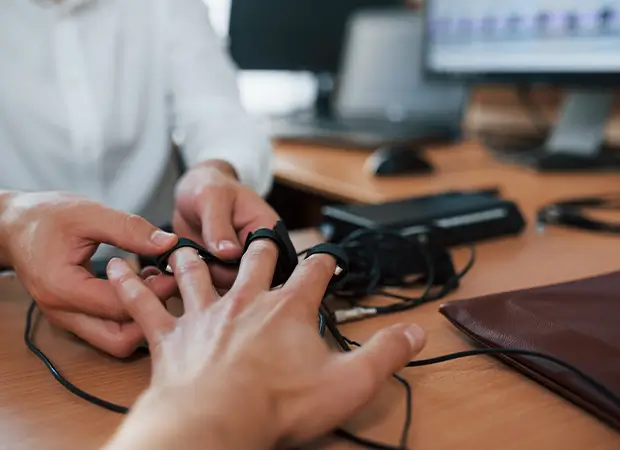
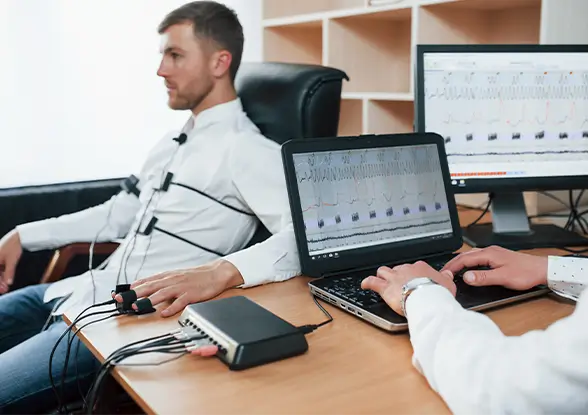
Real lie detectors are used in various scenarios such as legal disputes, workplace investigations, and pre-employment screenings. Their accuracy relies on several factors, including the expertise of the examiner, who must be well-trained and accredited to ensure reliable results. Modern polygraph devices with high-quality sensors and proper calibration are essential for accurate readings. The mental and physical state of the individual being tested also plays a critical role, as anxiety or medical conditions can affect physiological responses. Additionally, structured testing protocols, including pre-test interviews, ensure that the results are interpreted correctly and accurately.
Many police forces and other law enforcement agencies employ polygraphs to verify testimonies or detect inconsistencies. While polygraph results are not always admissible in court, they often serve as a tool to guide the investigative process.
Employers may use lie detector tests to identify misconduct, resolve disputes, or assess the truthfulness of allegations. For example, theft investigations within an organisation often employ polygraphs to find the root cause of the issue.
Believe it or not, lie detectors have a growing application in personal scenarios, including relationship disputes. Questions surrounding infidelity or trust can sometimes find their resolution through a polygraph test, offering clarity for all parties involved.
Accuracy
Graph tests are a form of psychological assessment designed to gauge an individual’s truthfulness by evaluating their physiological responses. These tests measure indicators such as heart rate, blood pressure, and respiration, under the premise that lying triggers heightened physiological reactions.
The accuracy rate of a single issue test is 92%-94% approximately.
When falsely accused, a lie detector test becomes an invaluable asset, extending the means to vindicate oneself and establish unwavering innocence.
When someone tells the truth, the chances of them failing the test are exceedingly slim.
The process is straightforward – we pose a series of questions and carefully monitor your physical responses during your answers. Through meticulous analysis, we provide a comprehensive report on the accuracy of each individual’s testimony. Determining whether they speak the truth or are deceitful becomes our objective.
The primary and singular reason for test failure lies in individuals either being untruthful or concealing important information.
Please allow two hours.
Due to the nature of our business, we kindly request a non-refundable deposit of £150 to secure your appointment. This helps us ensure your reservation with us.
You don’t need to prepare as we will guide you, no alcohol or illegal drugs 12hrs before a test.
Yes 18 years old.
We work with all parties to develop suitable questions that work, questions need to be based on fact and not on emotions. A test will usually comprise of three relevant questions asked over multiple charts.
Polygraph tests are a product of extensive research and diligence, rendering them among the most reliable methods for detecting deception worldwide. If you are truthful, there is no need for apprehension.
Its perfectly normal and expected to experience some degree of anxiety during a test.
There’s nothing that can cause you any pain. The worse feeling you may encounter is the blood pressure cuff as its inflated.
Yes absolutley, but a qualified examiner will catch you easily.
When the test is completed, we will furnish you with a comprehensive report derived questions posed and your corresponding answers.
Take legal advice here.
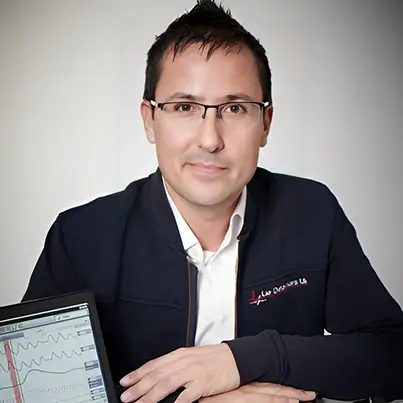
POLYGRAPH EXAMINER
POLYGRAPH EXAMINER
SECRETARY